Lincoln Aviator vs. Genesis GV80: Which Three-Row Luxury SUV Delivers More for Ontario Families?
January 30 2026,
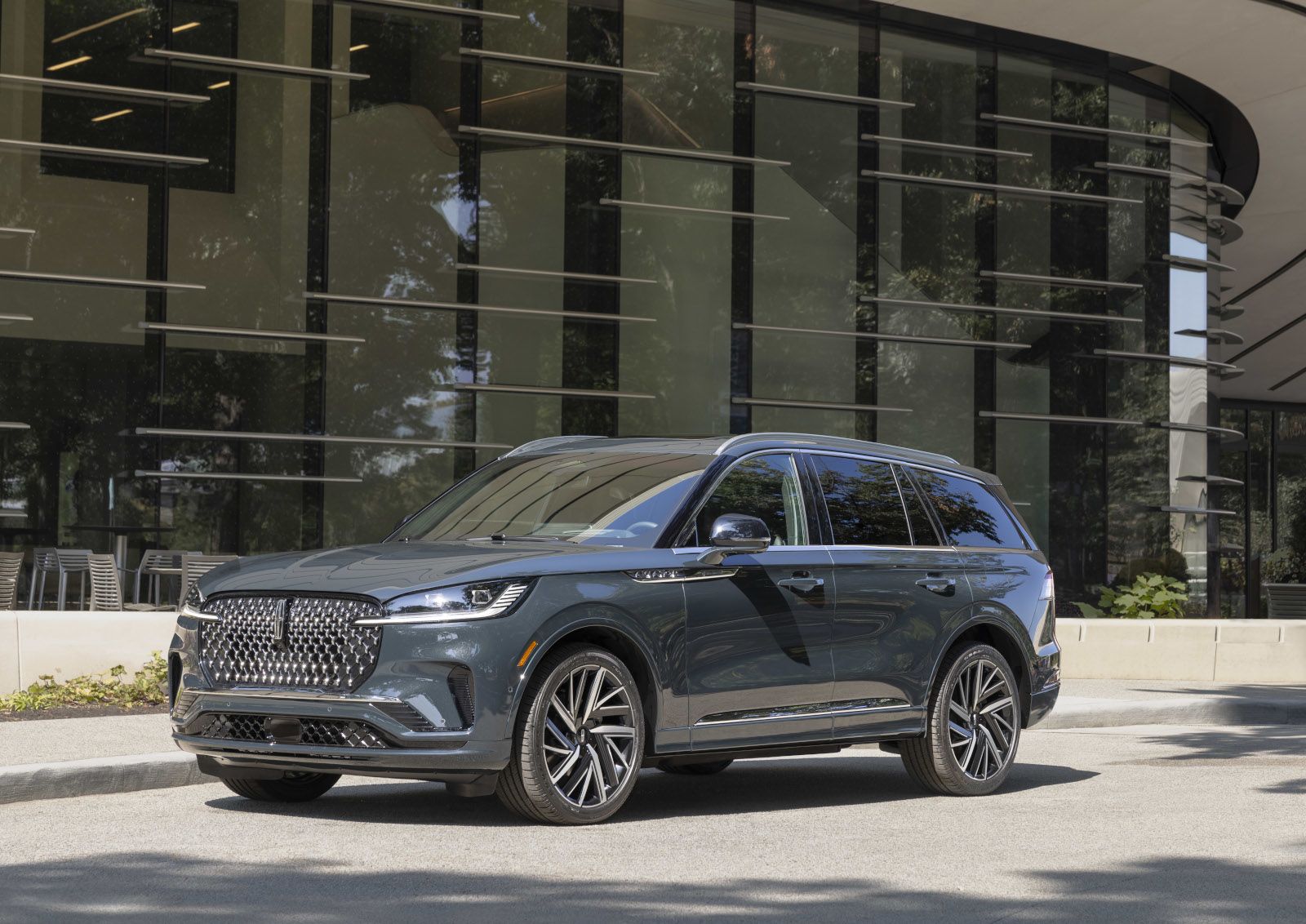
Ontario families shopping for three-row luxury SUVs face a competitive market where several strong contenders vie for attention. The Lincoln Aviator and Genesis GV80 3.5T Prestige represent two distinct approaches to the segment, each targeting similar buyers but delivering different priorities. Both offer three-row seating, advanced technology, and premium materials, but the differences in powertrain philosophy, technology interfaces, hands-free driving capability, and service programs create meaningful distinctions that affect daily ownership in Ontario.
Understanding these differences helps families make informed decisions based on actual priorities rather than marketing claims. This comparison examines the Aviator and GV80 across powertrains, technology systems, safety features, and ownership experience to clarify which vehicle better serves specific family needs in Alliston, Barrie, and across Simcoe County.
Powertrain Performance and Capability
Both vehicles employ twin-turbocharged V6 engines but with different outputs and characteristics. The Aviator uses a 3.0-litre twin-turbocharged V6 delivering 400 horsepower and 415 lb-ft of torque, paired with a 10-speed automatic transmission. The Genesis GV80 3.5T uses a 3.5-litre twin-turbocharged V6 producing 375 horsepower and 391 lb-ft of torque, connected to an 8-speed automatic transmission.
The 25-horsepower advantage for the Aviator translates to noticeably stronger acceleration during highway merging on Highway 400 or passing on two-lane provincial routes like Highway 89. The additional 24 lb-ft of torque provides more pulling power, useful for families towing utility trailers to cottage properties in Muskoka or hauling boats to Lake Simcoe marinas.
Both vehicles offer intelligent all-wheel drive systems that distribute power based on traction needs. Ontario winters demand capable all-wheel drive, and both systems handle snow-covered roads and icy conditions effectively. The performance difference becomes apparent during acceleration and highway passing situations rather than winter traction scenarios.
Powertrain Comparison:
- Aviator: 400 hp, 415 lb-ft, 10-speed automatic
- GV80: 375 hp, 391 lb-ft, 8-speed automatic
- Towing: Aviator includes Class III trailer tow package standard; GV80 towing capacity varies by configuration
Technology Interfaces and User Experience
The technology interface represents one of the most significant differences between these vehicles, affecting daily interaction more than most specifications.
The Aviator features the Lincoln Digital Experience powered by Google Built-in. This system integrates Google Maps, Google Assistant, and Google Play store directly into the vehicle. The 13.2-inch touchscreen in the center stack works alongside a 12.4-inch digital cluster, creating dual displays that separate driver information from entertainment and navigation functions.
For Ontario families already using Google services on smartphones, the Aviator's system provides seamless continuity. Google Maps updates in real-time with traffic conditions on Highway 400, construction delays through Barrie, or road closures affecting routes to Toronto. Google Assistant handles voice commands for navigation, climate control, and entertainment without requiring specific phrasing or commands—it understands natural language the same way a smartphone does.
Wireless Apple CarPlay and Android Auto remain available for those who prefer phone-based interfaces, but the native Google integration means the system functions fully without a connected phone.
The Genesis GV80 uses a proprietary infotainment system displayed on a 27-inch OLED display that spans much of the dashboard. This screen is physically larger than the Aviator's combined displays and creates an impressive visual presence. The system uses Genesis' own interface rather than integrating Google or Apple ecosystems natively.
While visually striking, the Genesis system requires learning its specific menu structures and command phrasing. Families accustomed to intuitive smartphone interfaces might find the learning curve steeper compared to the Aviator's Google-based system that already feels familiar.
Hands-Free Highway Driving Technology
Lincoln BlueCruise comes standard on the Aviator with a four-year subscription included. BlueCruise enables hands-free driving on designated highways—called Hands-Free Blue Zones—covering 97% of controlled-access highways across Canada and the United States. This includes Highway 400, Highway 401, and most major routes Ontario families use for travel.
BlueCruise includes Lane Change Assist, allowing drivers to initiate lane changes hands-free by tapping the turn signal when the path is clear. In-Lane Repositioning subtly shifts the vehicle away from vehicles in adjacent lanes, providing extra space when large trucks pass or during crowded highway conditions. The system handles steering, acceleration, and braking on supported roads while monitoring driver attention through a camera system.
For Ontario families making regular trips from Alliston to Toronto (90 km), cottage runs to Muskoka (150+ km), or visits to extended family across the province, hands-free driving reduces fatigue during highway portions of these journeys. The driver remains engaged and ready to take control but avoids the constant minor steering corrections and speed adjustments that highway driving requires.
The Genesis GV80 offers Highway Driving Assist 2 (HDA 2), which provides adaptive cruise control with lane centering. This system maintains speed, distance from vehicles ahead, and lane position but does not offer true hands-free operation. Drivers must keep hands on the steering wheel at all times, with the system providing warnings if it doesn't detect steering input within a certain timeframe.
While HDA 2 provides assistance, it doesn't deliver the same fatigue reduction as BlueCruise during long Ontario highway drives. The distinction becomes meaningful for families who frequently travel distances where hands-free capability provides genuine value.
Safety Technology and Driver Assistance
Both vehicles include comprehensive driver-assist technology suites, though with different naming conventions and specific features.
The Aviator includes Lincoln Co-Pilot360 2.1 as standard equipment, featuring Pre-Collision Assist with Automatic Emergency Braking (detecting vehicles and pedestrians), Lane-Keeping System (keeping the vehicle centered in its lane), Blind Spot Information System with Cross-Traffic Alert, and Evasive Steering Assist (providing steering support when collision avoidance requires it).
The available Lincoln Co-Pilot360 2.1 Vision adds a 360-degree camera system with front, side, and rear parking sensors, plus Reverse Brake Assist that can automatically apply brakes if a collision is imminent while backing up.
The Genesis GV80 includes a similarly comprehensive suite with Forward Collision-Avoidance Assist, Lane Keeping Assist, Blind-Spot Collision-Avoidance Assist, and a 360-degree camera system. Both vehicles protect occupants through multiple layers of active safety technology.
The functional difference lies more in how these systems integrate with the broader technology experience rather than raw capability differences. Both provide the safety features Ontario families need for daily driving and highway travel.
Interior Space and Passenger Comfort
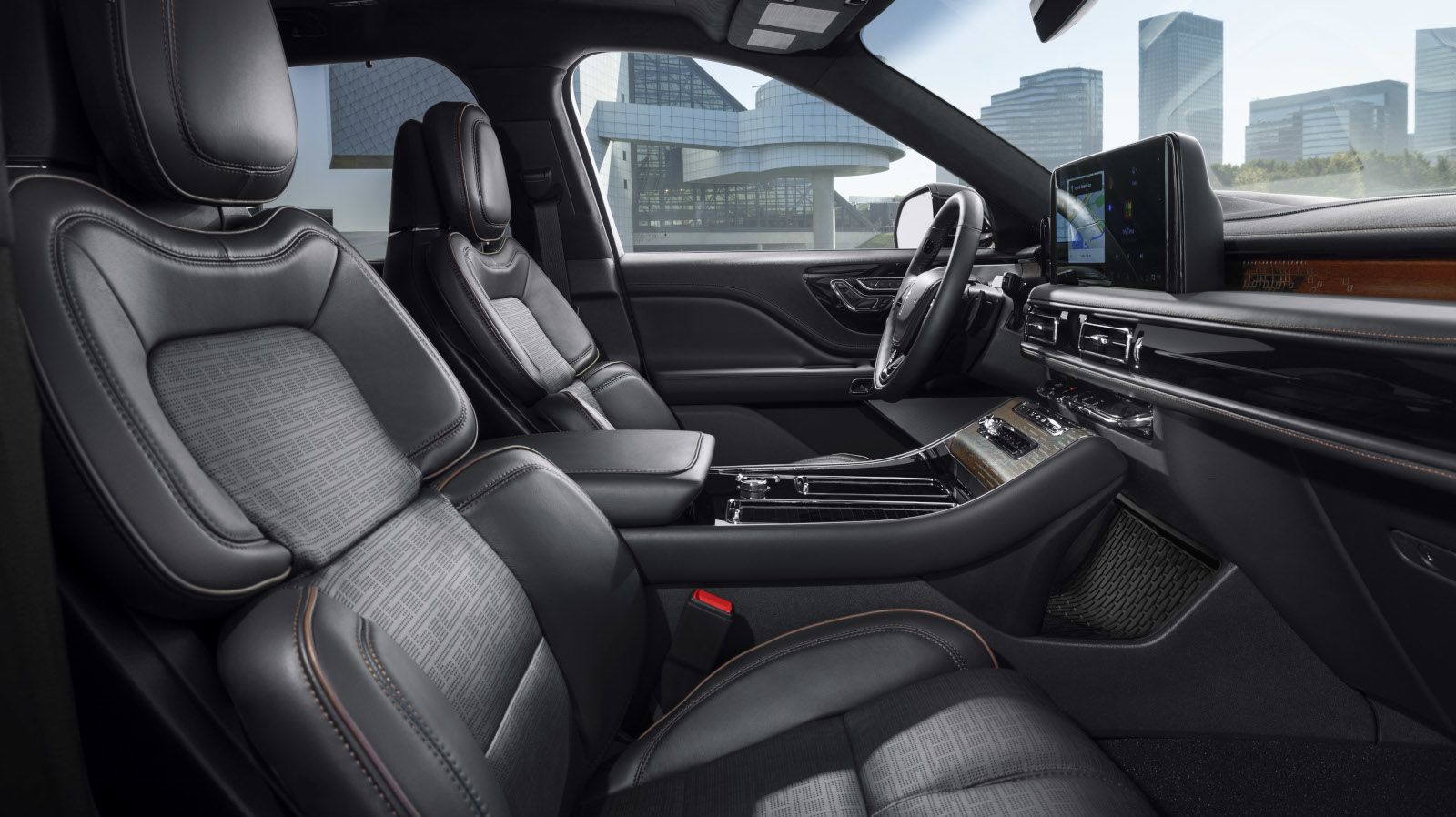
Both vehicles accommodate seven passengers across three rows, but interior dimensions and configuration options create different passenger experiences.
The Aviator offers a spacious cabin with the option of second-row captain's chairs or a three-across bench seat. The captain's chairs provide easier third-row access and individual passenger comfort, while the bench maximizes capacity for families with multiple children requiring car seats.
The available Revel Ultima 3D Audio System in the Aviator features 28 speakers positioned throughout all three rows, creating immersive sound that reaches rear passengers as effectively as front occupants. Second-row passengers can control audio through a dedicated rear control screen, allowing children or guests to manage entertainment without driver intervention.
The Genesis GV80 similarly offers second-row captain's chairs or bench seating. Its 27-inch OLED display creates a visual focal point, and the available audio system delivers quality sound, though the Aviator's 28-speaker Revel system provides more extensive coverage across three rows.
Both vehicles include tri-zone climate control, allowing driver, front passenger, and rear passengers to set individual temperature preferences—valuable during Ontario's temperature extremes when family members have different comfort needs.
Standard Features and Equipment
The Aviator includes several features as standard equipment that affect daily convenience:
- BlueCruise hands-free highway driving (4-year subscription)
- Lincoln Digital Experience with Google Built-in
- Panoramic Vista Roof (bringing natural light to all three rows)
- Heated and ventilated front seats
- Heated steering wheel
- Wireless phone charging
- Remote start
- 20-inch wheels
- Adaptive suspension
The Genesis GV80 3.5T Prestige similarly includes extensive standard equipment, with its large OLED display, premium materials, and available features packaged to match luxury expectations.
The key difference for Ontario buyers often comes down to the included technology subscriptions and service programs rather than feature lists alone.
Service and Ownership Programs
Lincoln offers the Lincoln Black Label program as an available upgrade, providing at-home vehicle pickup and delivery for service, annual detailing, and access to exclusive lounge areas at Lincoln dealerships. While this premium service costs extra, it addresses a common frustration—the inconvenience of arranging vehicle service.
Genesis offers Genesis at Home as part of its ownership experience, providing similar valet service for maintenance and repairs. This service-focused approach helps Genesis compete against established luxury brands by reducing ownership friction.
Both brands recognize that luxury increasingly means convenience and service rather than just vehicle equipment. For Alliston families with busy schedules, the availability of at-home service pickup affects real-world ownership satisfaction.
Practical Considerations for Ontario Families
Several practical factors affect daily ownership beyond specifications:
Dealership Network and Service Accessibility Lincoln has an established dealership network across Ontario, including locations in Simcoe County and surrounding regions. Service and parts availability benefit from this mature network and Lincoln's connection to Ford infrastructure.
Genesis operates with a smaller but growing dealership network in Ontario. Buyers should verify service location convenience relative to their regular travel patterns. The at-home service program helps offset potential inconvenience, but local service center proximity still matters for urgent situations.
Technology Familiarity Families already using Google services (Gmail, Google Calendar, Google Photos) on smartphones will find the Aviator's Lincoln Digital Experience immediately familiar. The system works the same way their phones work, reducing learning curves.
Families comfortable learning new interfaces or those who prefer keeping smartphone integration separate from vehicle systems might appreciate the Genesis proprietary system's independence from tech ecosystems.
Highway Travel Frequency BlueCruise provides the most value for families who regularly drive highway distances—commutes to Toronto, trips to cottages, or visits to family across Ontario. If most driving involves local errands around Alliston or Barrie without significant highway travel, hands-free capability becomes less relevant to daily experience.
Third-Row Usage Patterns Both vehicles accommodate three rows, but families should consider how often the third row gets used. Occasionally transporting extra passengers differs from daily carpool duty with multiple children. Both vehicles handle either scenario, but frequent third-row use emphasizes the importance of audio quality, climate control, and passenger comfort in rear seats—areas where the Aviator's 28-speaker audio system and tri-zone climate control provide advantages.
Making the Choice
The Lincoln Aviator and Genesis GV80 target the same buyer—Ontario families wanting three-row luxury with advanced technology—but prioritize different aspects of the ownership experience.
The Aviator emphasizes powertrain performance (400 hp vs. 375 hp), hands-free highway driving capability (BlueCruise vs. HDA 2), and technology integration through Google Built-in. It delivers stronger acceleration, more convenient long-distance highway travel, and an interface that feels immediately familiar to smartphone users.
The Genesis GV80 focuses on visual technology impact (27-inch OLED display), value positioning, and comprehensive standard equipment. It provides a striking interior presentation and competitive feature content at its price point.
Ontario families should consider:
- How often they drive highway distances where BlueCruise provides fatigue reduction
- Whether Google ecosystem integration or proprietary interface independence matters
- If the 25-horsepower difference affects their driving situations (towing, highway passing)
- Which dealership network and service program better serves their location and schedule
Both vehicles deliver on the luxury three-row promise. The choice comes down to which specific priorities align with how your family actually uses a vehicle across Ontario's diverse driving conditions and distances.
Experience Both at Trillium Lincoln
The differences between the Aviator and GV80 become clear during actual driving and technology interaction rather than specification comparison alone. Visit Trillium Lincoln in Alliston to experience how the Aviator's BlueCruise, Google Built-in interface, and powertrain performance address your family's specific needs on Ontario roads.